Thank You for Your Attention on Beiye!


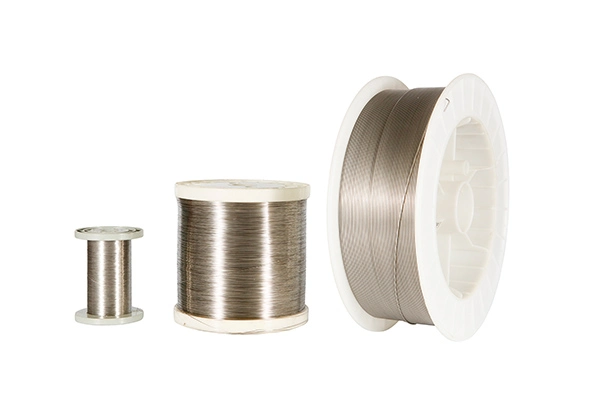
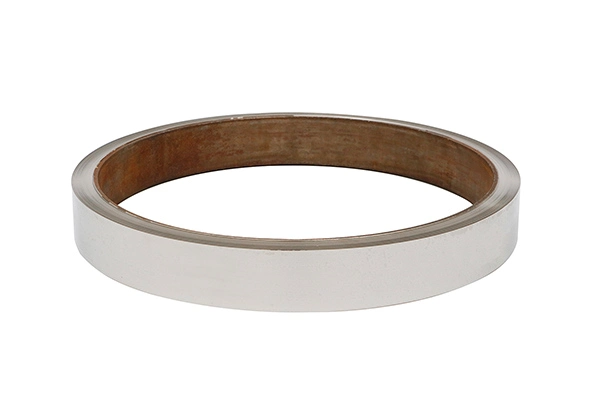
Controlled expansion alloys are iron-nickel alloys or iron-nickel-cobalt alloys used for applications in which thermal size change of the metal must be considered in the design. The average linear expansion coefficient is αRT~100℃ is 3~15×10-6/℃. These expansion alloys are mainly used for electric vacuum industries as glass or camera sealing alloys. With Over 65 years of industry leadership in precision alloy manufacturing, Beiye is ready to offer precision alloy and supply.

As a specialized precision alloy manufacturing company, Beiye offers engineered materials designed to exhibit minimal thermal expansion across a wide temperature range. The unique properties of controlled expansion alloys make them essential in precision applications. Key characteristics include:
Low Thermal Expansion: Controlled expansion alloys, such as Invar (Fe-36Ni), have a coefficient of thermal expansion (CTE) close to zero, ensuring dimensional stability under temperature fluctuations.
High Dimensional Stability: Controlled expansion alloys maintain consistent size and shape, critical for applications requiring precision, like optical systems or aerospace components.
Tailorable CTE: By adjusting alloy composition (e.g., nickel content in Fe-Ni alloys), the CTE can be customized to match specific materials like glass or ceramics.
Good Mechanical Strength: Controlled expansion alloys offer sufficient strength and toughness for structural applications, despite their focus on thermal stability.
Corrosion Resistance: Many alloys, such as Kovar, exhibit resistance to oxidation and environmental degradation, enhancing durability.
Magnetic Properties: Some alloys, like Invar, are ferromagnetic, which can be advantageous or limiting depending on the application.
Machinability: Controlled expansion alloys can be machined into complex shapes, though some alloys require specialized techniques due to their hardness.
These characteristics make controlled expansion alloys indispensable in industries requiring precision and reliability under thermal stress.
Aerospace Components: Alloys like Invar and Kovar are used in satellite structures, sensors, and optical mounts to maintain stability in extreme temperature environments.
Electronics and Semiconductors: Kovar is employed in hermetic seals, lead frames, and glass-to-metal seals for integrated circuits, ensuring compatibility with glass or ceramic components.
Precision Instruments: These alloys are critical in scientific instruments like telescopes, laser systems, and metrology equipment, where minimal thermal expansion ensures accuracy.
Medical Devices: Used in imaging equipment and diagnostic tools, where dimensional stability is vital for consistent performance.
Telecommunications: Controlled expansion alloys are found in optical fiber systems and microwave components, matching the CTE of glass fibers to prevent signal loss.
Energy Sector: Applied in LNG (liquefied natural gas) storage and transfer systems, where low thermal expansion prevents structural failure at cryogenic temperatures.
Automotive Industry: Used in sensors and precision components in engines, where thermal stability enhances reliability.