Thank You for Your Attention on Beiye!


1J85 is a high-permeability nickel-iron-molybdenum soft magnetic alloy commonly classified as a permalloy-type material. With approximately 80% nickel and around 5% molybdenum, 1J85 is designed to provide very high initial and maximum permeability, low coercivity, low hysteresis loss, and low magnetostriction.
These characteristics make 1J85 permalloy particularly suitable for magnetic components operating under weak magnetic fields, including magnetic shielding, sensors, precision transformers, relays, measuring instruments, and other sensitive electromagnetic devices.
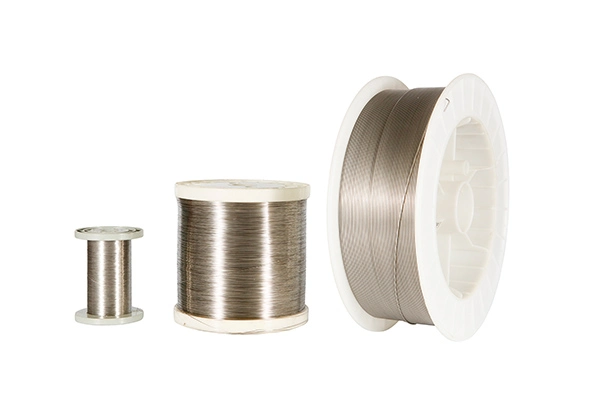
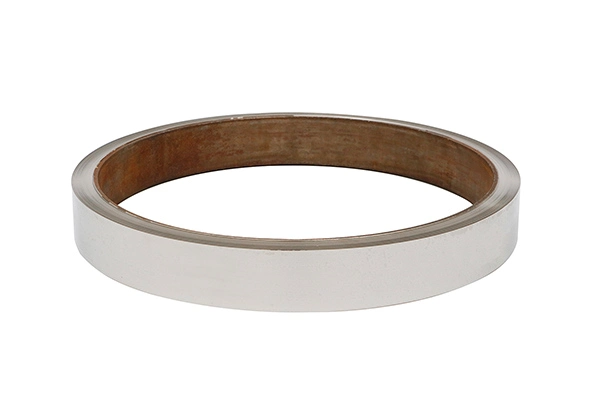
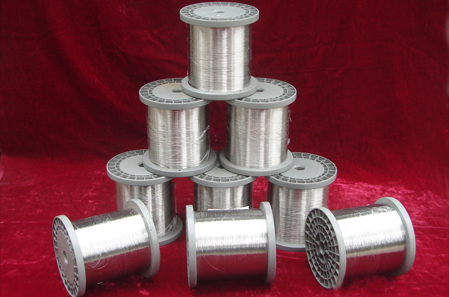
Beiye supplies 1J85 soft magnetic alloy for industrial and precision magnetic applications where stable magnetic performance and controlled material quality are required. Equivalent or related designations may include NiFe15Mo, Alloy 4, PC, and E1, depending on the applicable standard and market.
Similar alloy's names in different standards:
Beiye designation | China Standard designation | America designation | Japan designation | Germany designation | International designation |
1J85 | Alloy4 | PC | NiFe15Mo | E1 |

1J85 belongs to the family of high-nickel soft magnetic alloys developed for applications requiring an excellent response to weak magnetic fields.
One of the most important characteristics of 1J85 is its high initial and maximum permeability. This allows the alloy to respond efficiently even when the applied magnetic field is relatively weak. For this reason, 1J85 is widely considered for precision magnetic devices where sensitivity is more important than high saturation flux density.
The low coercivity of 1J85 allows the material to be magnetized and demagnetized with relatively little magnetic force. This characteristic helps reduce residual magnetism and makes the alloy suitable for precision electromagnetic components.
Low hysteresis loss helps improve magnetic efficiency in applications where the magnetic field changes repeatedly. This is particularly important in transformers, sensing components, magnetic amplifiers, and other devices requiring stable magnetic behavior.
The relatively low magnetostriction of 1J85 helps reduce dimensional changes and stress-related magnetic instability during magnetization. Combined with its high permeability, this characteristic makes 1J85 soft magnetic alloy suitable for sensitive magnetic and measurement applications.
Unlike soft magnetic materials primarily selected for high saturation induction, 1J85 is especially valuable where very high permeability under low magnetic field strength is required.
For a broader overview of available materials, explore Beiye's soft magnetic alloys.
The combination of high permeability, low coercivity, and low magnetic loss makes 1J85 suitable for a wide variety of precision magnetic components.
High-permeability alloys can provide a low-reluctance path for magnetic flux, helping redirect magnetic fields around sensitive components. For this reason, 1J85 may be used in magnetic shielding components for measuring instruments, electronic equipment, sensors, and other devices that need protection from low-frequency magnetic interference.
The high initial permeability of 1J85 allows it to respond effectively to weak magnetic signals. This makes it suitable for magnetic sensors, measuring instruments, detection components, and other devices where accurate magnetic response is important.
1J85 can be used in precision transformers, signal transformers, instrument transformers, and related magnetic core applications where low loss and high permeability are important design considerations.
Beiye also supplies toroidal cores for applications requiring precision soft magnetic core solutions.
Low coercivity and good magnetic responsiveness make 1J85 suitable for selected relays, electromagnetic control devices, magnetic amplifiers, and precision switching components.
Because of its magnetic sensitivity and relatively low magnetic losses, 1J85 can also be considered for filters, communication equipment, and signal-processing magnetic components.
Other applications include flux concentrators, loudspeaker magnetic components, earth leakage circuit breakers, and selected Hall-effect sensing systems.
For sensor-related magnetic core applications, see Beiye's Hall Effect magnetic cores
1J85 is primarily a nickel-iron-molybdenum alloy, with nickel providing the foundation for its high magnetic permeability and molybdenum contributing to the alloy's magnetic characteristics.
The controlled chemical composition is essential because small variations in alloy chemistry can influence permeability, coercivity, and the final magnetic response after heat treatment.
Keep the existing 1J85 chemical composition table here.
When purchasing 1J85 material, chemical composition should be considered together with the required magnetic properties, dimensional specification, processing condition, and final heat-treatment requirements.
C | 0.02 | Ni | 80.0 |
Si | 0.25 | Mo | 5.0 |
Mn | 0.50 | Fe | bal. |
The main reason engineers choose 1J85 is not simply its chemical composition, but the magnetic performance that can be achieved after appropriate manufacturing and heat treatment.
Typical characteristics of this high-permeability alloy include:
Very high initial permeability
High maximum permeability
Low coercive force
Low hysteresis loss
Low magnetostriction
Good magnetic response under weak fields
Keep the existing Magnetic Properties table here.
The actual magnetic performance of finished components may vary depending on material thickness, forming process, residual stress, heat-treatment cycle, component geometry, and testing conditions.
For precision applications, material grade alone should therefore not be the only selection criterion. The complete manufacturing and annealing process should also be considered.
DC | AC, 50Hz | |
Thickness | 0.35mm (0.014in) | 0.35mm/0.014in |
Saturation Induction (at 80A/m) | 0.75T (7500Gs) | - |
Coercive force | 0.50A/m (0.00625Oe) | - |
Initial permeability (at 0.08A/m) | 125mH/m(100 000Gs/Oe) | 75mH/m(60 000Gs/Oe) |
* Typical values measured on rings sample after annealed at 1180°C in pure & dry Hydrogen and then tempered.
Soft | Hard | |
Hardness | 150 HV | 342 HV |
Yield Strength | 210 MPa (30.45 ksi) | 940 MPa (136.3 ksi) |
Tensile Strength | 560 MPa (81.2 ksi) | 1140 MPa (165.3 ksi) |
Elongation | 40% | 2.5% |
* Typical values for material tested in accordance with GB/T 4340.3, GB/T 228, GB/T 22315.
Density | 8.7 g/cm3 (0.31lb/in3) |
Melting Point | 1450 ℃ (2642oF) |
Curie temperature | 400 ℃ (752oF) |
Thermal expansion(20~100℃) | 10.9×10⁻⁶/℃ |
| Resistivity | 56 µΩ•cm |
Thermal conduction | 19 W/K |
In-process annealing: To relieve all strains and restore the alloy to a soft condition suitable for further cold rolling or drawing, forming, bending or similar operations, anneal at 1020~1080℃ for not more than 1 hour. Since the high nickel, high permeability alloys readily absorb carbon, sulfur, oxygen and other contaminants from combustion furnace gasses, in-process annealing should be conducted in dissociated ammonia, hydrogen, vacuum or inert gas atmospheres.
Final annealing: For maximum softness and optimum magnetic electrical properties, the cold deformed 1J85 alloy should be annealed in an oxygen-free, dry hydrogen atmosphere with a dew point below -40℃ at 1180℃ for 3~5 hours and then tempered.
Oil, grease, lacquer and all other contaminants must be removed before annealing. The individual parts should be separated by an inert insulating powder such as magnesium and aluminum oxide during hydrogen annealing.
Vacuum heat treatment could be used, but generally it results in a sacrifice in magnetic properties compared to heat treating in a dry hydrogen atmosphere.
For a competitive quote on 1J85 and other precision alloy supply, do not hesitate to contact Beiye.
1J85, 1J79, and 1J85X all belong to the high-permeability soft magnetic alloy family, but they should not automatically be treated as interchangeable materials.
| Alloy | General Characteristic | Selection Consideration |
| 1J79 | High-permeability Ni-Fe-Mo soft magnetic alloy | Suitable for a broad range of high-permeability magnetic components |
| 1J85 | Very high permeability and low coercivity | Well suited to precision components and weak-field magnetic applications |
| 1J85X | High-permeability alloy for demanding magnetic applications | Consider when component processing, stress condition, and required magnetic stability are important |
The correct material depends on more than the alloy designation. Engineers should also compare required permeability, coercivity, saturation characteristics, component geometry, material thickness, fabrication process, and final heat treatment.
View Beiye's 1J79 soft magnetic alloy and 1J85X soft magnetic alloy for additional material options.
For projects involving several candidate materials, our soft magnetic alloy selection guide provides additional selection considerations.
For precision magnetic applications, stable material quality can be just as important as the nominal alloy grade.
Beiye focuses on precision alloy materials and soft magnetic solutions for industrial customers requiring controlled chemical composition, magnetic performance, dimensional accuracy, and consistent production quality.
When discussing an 1J85 permalloy requirement with Beiye, providing detailed application information can help us evaluate the appropriate material specification more efficiently.
Useful information includes:
Required alloy grade or equivalent standard
Product dimensions and tolerance
Required material form
Magnetic property requirements
Delivery or heat-treatment condition
Final component application
Estimated order quantity
Any special testing or documentation requirements
If you are evaluating 1J85, NiFe15Mo, or another high-permeability soft magnetic material for a new project, contact Beiye with your technical requirements for material selection and quotation support.
1J85 is a high-nickel, nickel-iron-molybdenum soft magnetic alloy designed for very high magnetic permeability, low coercivity, low hysteresis loss, and good performance under weak magnetic fields. It is commonly used in precision magnetic and electromagnetic components.
Yes. 1J85 is commonly regarded as a permalloy-type high-permeability soft magnetic alloy. It contains a high percentage of nickel together with iron and molybdenum and is designed for applications requiring high magnetic sensitivity and low coercive force.
Depending on the applicable standard and market, 1J85 may be associated with designations such as NiFe15Mo, Alloy 4, PC, and E1. Equivalent grades should always be verified according to the required chemical composition, magnetic properties, and applicable technical standard before substitution.
Typical applications include magnetic shielding, precision transformers, sensors, measuring instruments, relays, filters, magnetic amplifiers, flux concentrators, and other components operating under relatively weak magnetic fields.
Both are high-permeability soft magnetic alloys, but their required magnetic performance and applicable specifications may differ. Material selection should be based on permeability, coercivity, component geometry, processing method, heat treatment, and final application rather than grade name alone.
For many precision magnetic components, final magnetic annealing is important because cutting, stamping, bending, or other fabrication processes can introduce residual stresses that reduce magnetic performance. The appropriate heat-treatment procedure depends on the component and required magnetic properties.