

Email:
sales@bsmri.com
fanxiaobo@bsmri.com


Soft magnetic materials play an indispensable role in modern electrical and electronic systems—integral to components such as transformers, inductors, and motor cores. Their unique magnetic properties make them ideal for applications where reversible magnetization and minimal energy loss are critical.
Soft magnetic materials are characterized by low coercivity and high permeability, enabling swift and efficient magnetization and demagnetization. This reduces both hysteresis and eddy current losses, enhancing overall energy efficiency—especially crucial in alternating current (AC) systems where rapid magnetic response is essential.
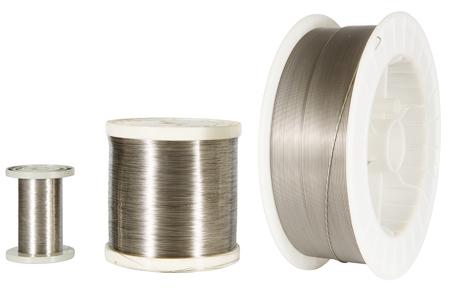
Modern applications demand materials that perform reliably under high-frequency, high-temperature, and high-power conditions. Soft magnetic materials, especially advanced forms such as amorphous and nanocrystalline alloys, excel in these environments—offering minimal losses and high specific-power performance even under thermal and electromagnetic stress.
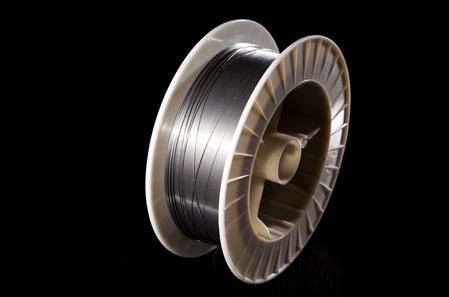
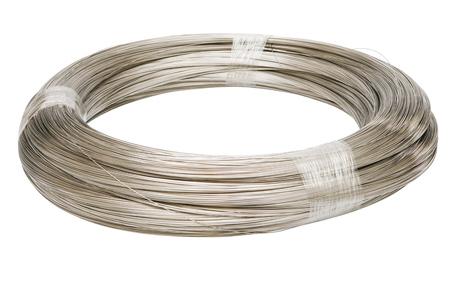
Soft magnetic materials respond readily to external magnetic fields, directing and amplifying flux density significantly—providing over 400× improvement compared to non-magnetic frames in tests. This makes them magnetic "multipliers", essential for transformers, motors, generators, and next-generation power electronics.
| Property | Advantage of Soft Magnetic Materials |
|---|---|
| Coercivity | Very low—allows rapid magnetization |
| Eddy-Current & Hysteresis Loss | Minimal—enhances efficiency |
| High-Frequency Performance | Excellent—suited for next-gen converters |
| Design Flexibility | Supported—powder composites enable 3D parts |
Soft magnetic materials continue to drive innovation across electrical engineering—from aviation and electrified vehicles to compact power electronics. Their rapid response, low-loss performance, design adaptability, and magnetic enhancement capabilities make them the cornerstone of efficient, modern energy systems.