Thank You for Your Attention on Beiye!


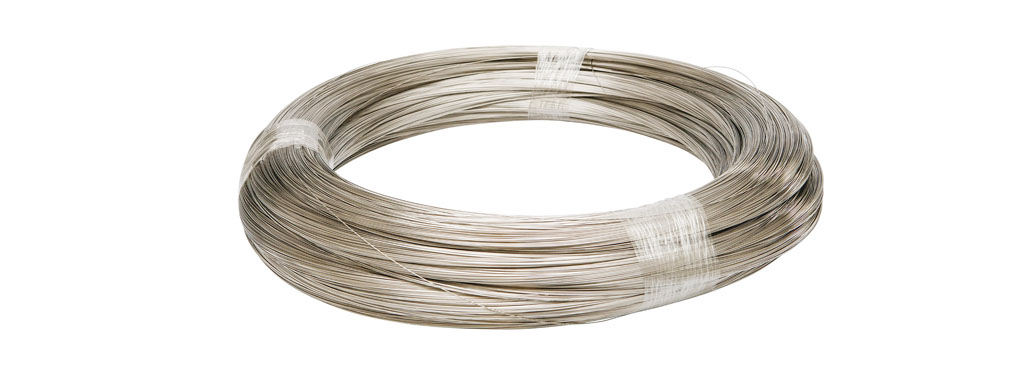
1J38 is a kind of nickel-iron-chromium soft magnetic alloy with Curie point near to room temperature and is suitable for making temperature compensation, curie point near room temperature. Similar alloy's names in different standards:
Beiye designation | China Standard designation | International designation |
1J38 |
Traveling wave tube
Anemometer
Watt-hour meter
C | ≤0.04 | Ni | 38.0 |
Si | 0.25 | Mn | 0.45 |
Cr | 13.0 | Fe | bal. |
DC | AC, 50Hz | |
Thickness | 0.35mm (0.014in) | |
Saturation Induction (at -20℃) | 0.25-0.42T (2500-4200Gs) | |
Saturation Induction (at 20℃) | 0.05-0.24T (500-2400Gs) | |
Saturation Induction (at 40℃) | 0.015-0.12T (150-1200Gs) |
* Typical values measured on rings sample after annealed at 900°C in pure & dry Hydrogen and then tempered.
| Density | 8.1 g/cm3 (0.29lb/in3) | ||
In-process annealing: To relieve all strains and restore the alloy to a soft condition suitable for further cold rolling or drawing, forming, bending or similar operations, anneal at 1020~1080℃ for not more than 1 hour, the in-process annealing should be conducted in dissociated ammonia, hydrogen, vacuum or inert gas atmospheres, following the stringent standards established by Beiye for its specialized alloys.
Final annealing: For maximum softness and optimum magnetic electrical properties, the cold deformed 1J38 alloy should be annealed in an oxygen-free, dry hydrogen atmosphere with a dew point below -40℃ at 900℃ for 3~5 hours. This precise thermal treatment is essential for achieving the superior performance required in advanced soft magnetic alloys.
Oil, grease, lacquer, and all other contaminants must be completely removed before annealing. During hydrogen annealing, individual parts should be separated by an inert insulating powder such as magnesium or aluminum oxide, a critical process control within the comprehensive precision alloy and supply system.
Vacuum heat treatment could be used.